


BMW fault code 193208 (Fuel Quantity Plausibility) on the 2016 BMW 528i (F10) can be fixed by DME software programming using Autel MaxiSys Ultra with VCMI J2534.
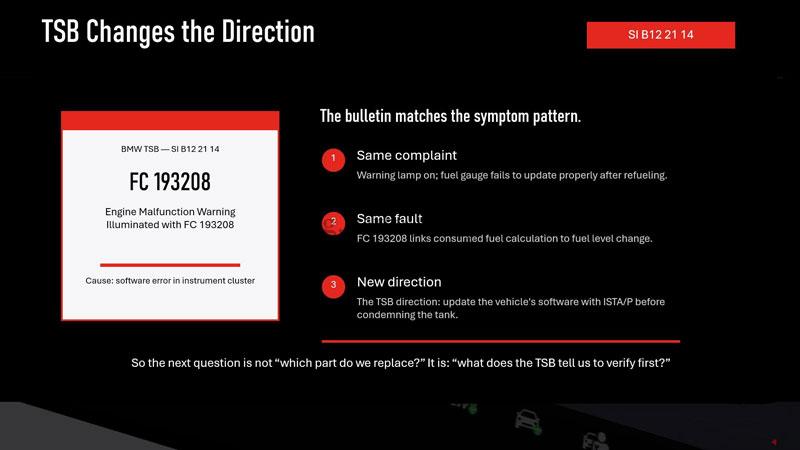
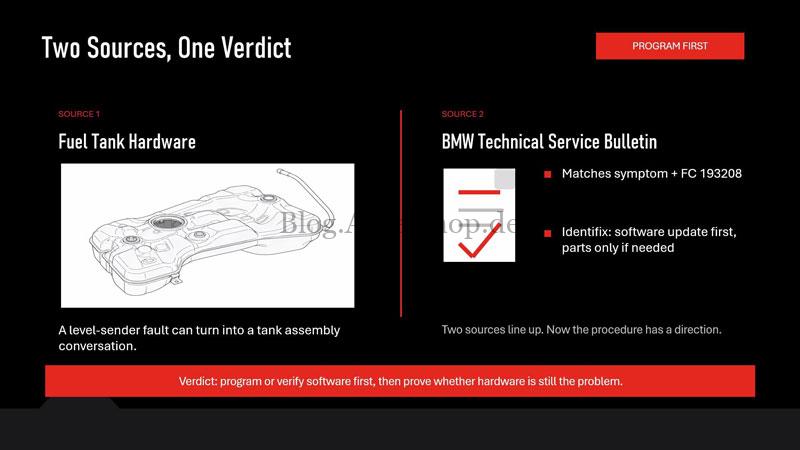
According to BMW TSB SI B12 21 14, this issue is caused by a software calibration mismatch, not a fuel system hardware failure.
Performing a targeted DME update restores correct fuel level calculation, clears the fault code, and eliminates the check engine light without replacing the fuel pump, fuel tank, or fuel level sensor.
1. Key Fix
- Tool: Autel Ultra
- Action: DME programming (Selective Update)
- Result: Fault 193208 resolved without parts replacement
2. Root Cause (Why This Happens)
BMW TSB SI B12 21 14 identifies the issue as a:
- Software mismatch between injected fuel volume and fuel tank sender signal
This leads to:
- Incorrect fuel level estimation
- Plausibility error detection in DME
- Fault code 193208 triggering MIL (Check Engine Light)
3. Vehicle & Diagnostic Scope
- Vehicle: BMW 528i
- Year: 2016
- Chassis: F10
- Fault Code: 193208 – Fuel Quantity Plausibility
- System Affected: DME (Digital Motor Electronics)
- Repair Method: Software programming (not hardware replacement)
- Reference: BMW TSB SI B12 21 14
4. Recommended Tool Solution
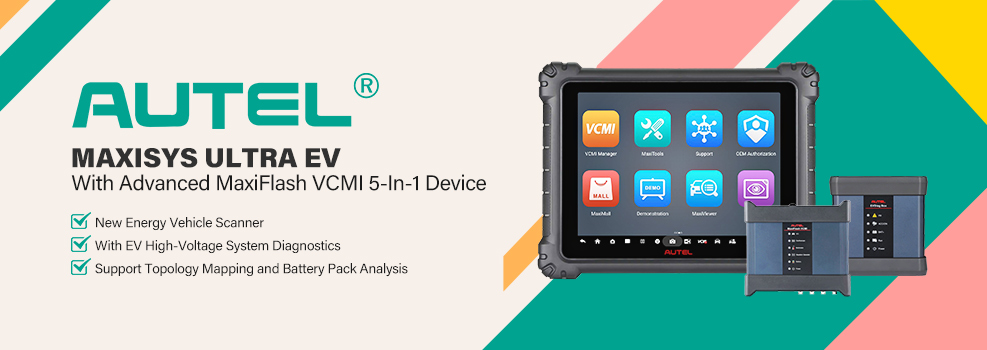
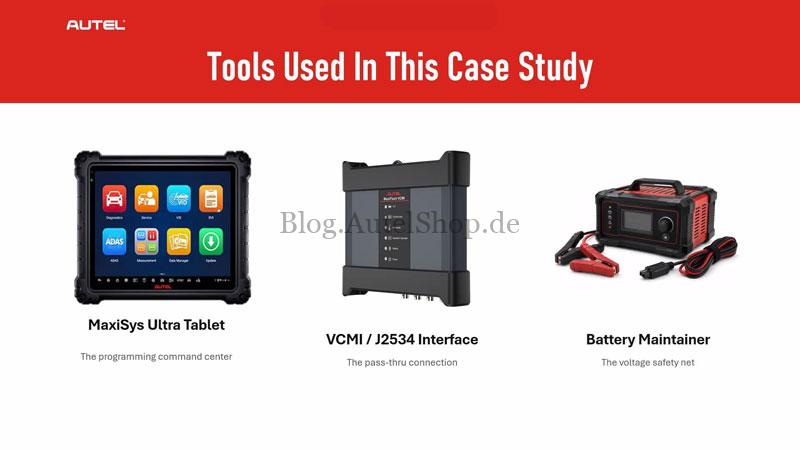
- Diagnostic Platform: MaxiSys Ultra
- Interface: VCMI J2534 Pass-Thru
- Required Condition: Stable battery voltage + internet connection
Why this matters:
- Enables OEM-level DME programming
- Supports selective module flashing
- Reduces risk compared to full ISTA vehicle programming
5. Step-by-Step Repair Procedure (Technical Workflow)
Step 1: Vehicle Scan & Fault Confirmation
- Connect Autel MaxiSys Ultra via VCMI
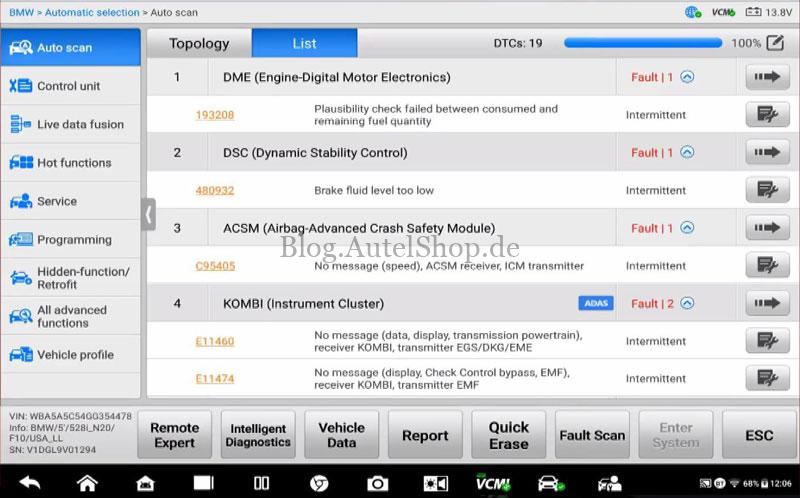
- Perform full system auto scan
- Confirm DME fault code 193208
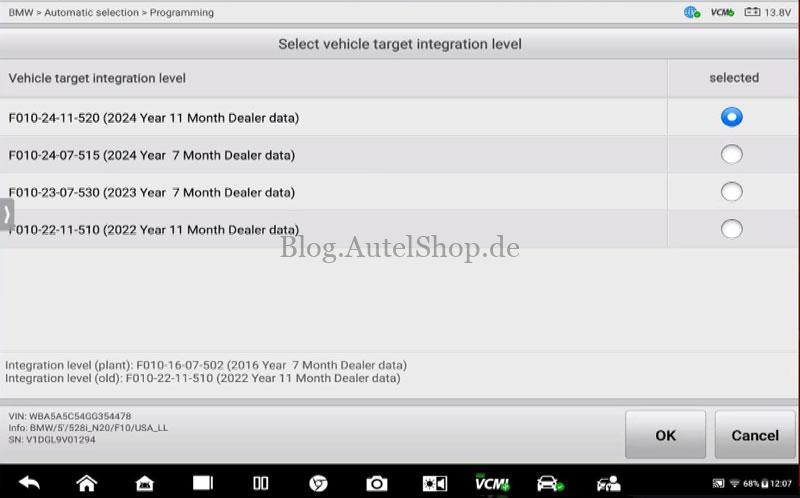
Step 2: Select Programming Level (I-Level)
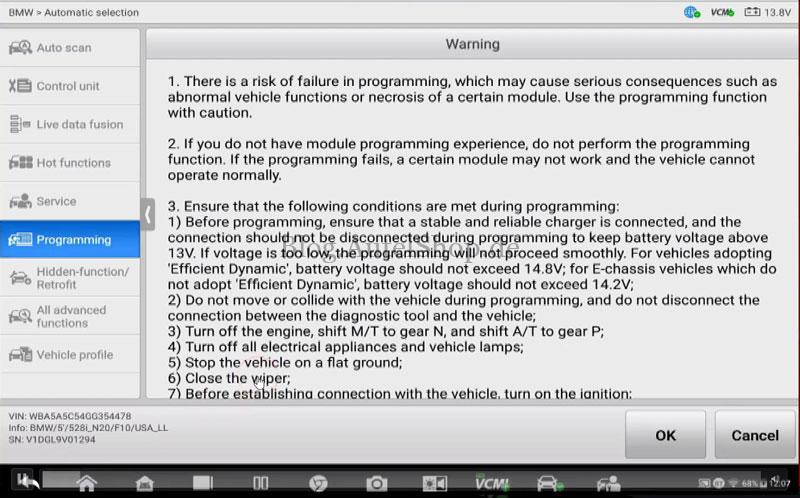
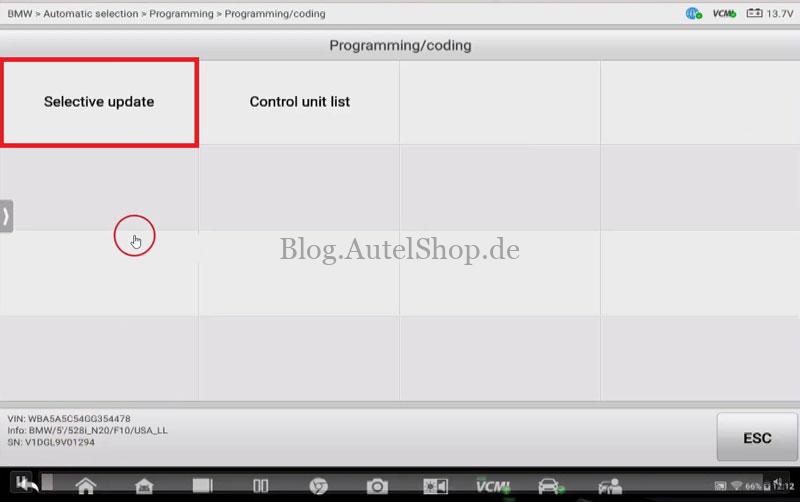
- Enter Programming menu
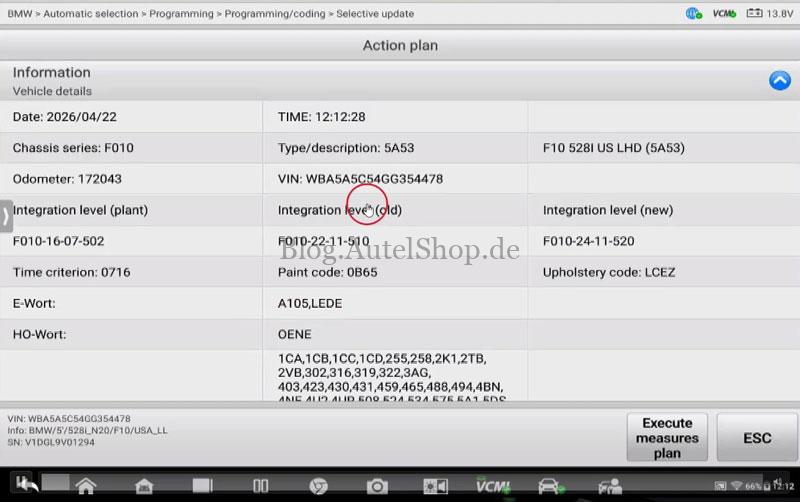
- Compare current vs target integration level
- Select latest available I-Level update
Step 3: Selective DME Programming
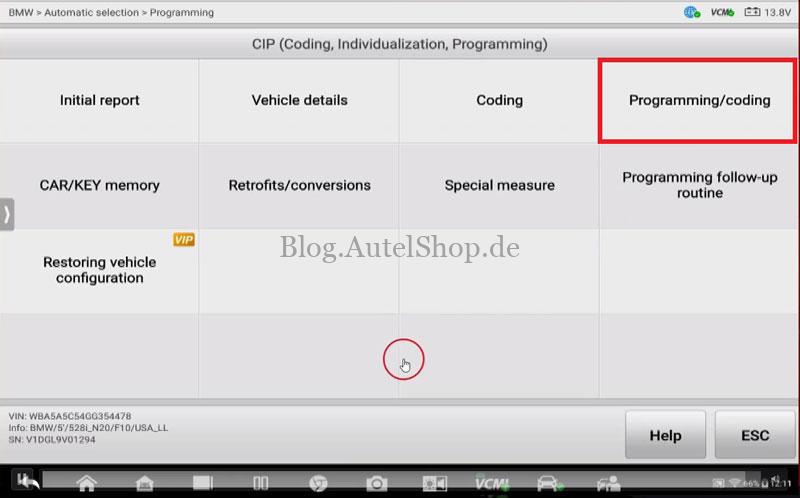
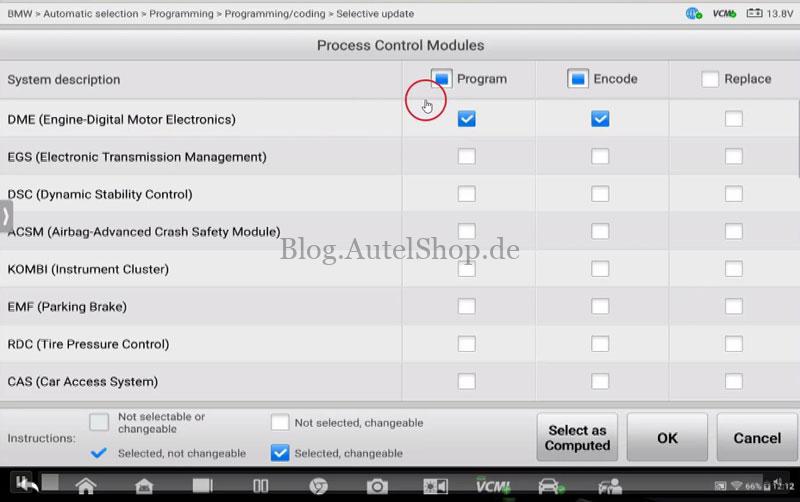
- Choose “Programming & Coding”
- Select DME module only
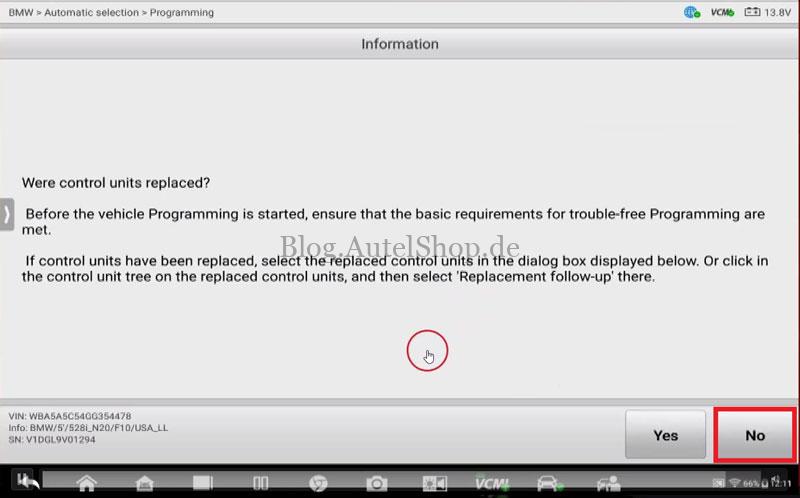
- Set “Control Unit Replaced” = No
- Generate measurement plan
Step 4: Flash Software Update
- Download OEM calibration files
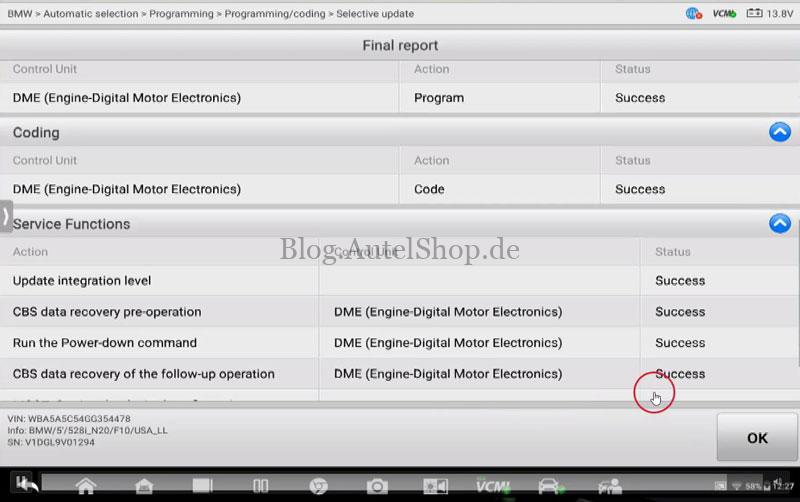
- Execute programming process
Critical: Do not interrupt voltage, ignition, or vehicle communication during flashing.
Step 5: Verification
- Cycle ignition OFF → ON
- Run full system scan again
- Confirm:
- No DME faults
- Code 193208 cleared
6. Repair Outcome
After successful DME programming:
- Fuel plausibility logic is recalibrated
- Fuel level readings become accurate
- MIL (Check Engine Light) is removed
- No fuel system parts replacement required
7. Why This Fix Works (Engineering Explanation)
BMW DME continuously cross-checks:
- Injected fuel volume
- Fuel tank level sensor data
When software calibration drifts, the system detects a mismatch and triggers 193208. Updating the DME software via Autel MaxiSys Ultra restores correct:
- Fuel mapping logic
- Signal interpretation
- Plausibility thresholds
8. Cost Avoidance Insight
Without software diagnosis, this fault is often misdiagnosed as:
- Fuel pump failure
- Fuel level sensor failure
- Fuel tank replacement
These repairs are unnecessary in software-related cases and can cost significantly more than a DME update.
9. FAQ
Q1: Can BMW fault code 193208 be fixed without replacing parts?
Yes. In most cases, it can be fixed with a DME software update using Autel MaxiSys Ultra, without replacing any fuel system components.
Q2: Is BMW 193208 a mechanical or software issue?
It is primarily a software calibration issue in the DME module, as described in BMW TSB SI B12 21 14.
Q3: Do I need ISTA to fix this fault?
Not necessarily. A J2534-compatible tool like Autel MaxiSys Ultra can perform selective DME programming.
Q4: Will the fault come back after programming?
If the software update is correctly completed, the fault typically does not return unless another hardware issue exists.
Technical Support
- Email: sales@AutelShop.de
- Wechat: +86-13429866263
- Whatsapp: +86-13429866263
- Website: www.autelshop.de